Showing posts with label stars. Show all posts

Monday, December 25, 2023

Salaam Alaikum, Minnesota!

Effective May 11, 2024

I just looked into this story after seeing a post about it on Facebook.  Minnesota has chosen a new flag. It's a decent flag in my opinion, and better than any of the five other finalists that the redesign commission had chosen. Problematic cultural issues aside, which are by far enough to merit a redesign, the old flag was just an aesthetic mess. It was not only ugly and indistinguishable from any number of similar state flags, it managed to be both busy and boring.  

The outgoing flag, 1957 revision 

So, good on Minnesota for changing it.  Now the state has a distinct, striking, and streamlined flag.  Ted Kaye, who literally wrote the book on flag design, gives it an A+.

Kaye, of the North American Vexillological Association, considers it to be one of the ten best US state flags.  A far cry from 2001, when the same Association named the previous flag one of the ten worst.   If I recall correctly, the old flag breaks at least 4 of Kaye's rules for effective flag design (it does).

Critics of the new flag are crying foul, saying it's wokeism run amok.  Some even claim it represents a kind of Somali "takeover" of Minnesota, because of a perceived likeness to the flag of Jubaland.  Jubaland is a part of Somalia, and Minneapolis has a large Somali community, the largest outside of Somalia; when I called the High School in Minneapolis, where my son did a year abroad, one could continue one's call in Somali. 

Talk of takeover and nativist, "great replacement" fear-mongering is ironic, because the old flag literally depicted the actual historical takeover of what is now Minnesota from the Native Americans....an Indian rides away as Sven sews his newly stolen fields...

Flag of Jubaland, home of Minnesota's new overlords

But like removing confederate imagery from southern states' flags, it's time; our  political symbols must reflect, respect, and represent all of our citizens. And man, the old flag was an eyesore. I can't imagine anyone actually being proud of it. Time will tell for the new one, but at least they've given the people something to work with.

Saturday, September 24, 2022

Europa, Europa, Europa, Europa, Europa, Europa, Europa, Europa, Europa, Europa, Europa, Europa

 A.


B.


C.


The Flag of a US Foreign Service Officer
13 stars with jaunty alternating positions....


D.


12 hours on a clock (often IIII not IV but IX, BTW)
12 months in a year 
12 symbols of the zodiac 
12 Apostles 
12 sons of Jacob 
12 semitones in an octave (western music)
12 days of Christmas
12 Caesars chronicled by Suetonius
12 Olympian gods
12 labors of Hercules
12 tables of Roman Law
12 Hues in the color wheel, star or sphere (western art)

Friday, July 29, 2022

The Random Sun

At the supermarket, stuck for ideas, I asked the woman at the register to give me a random word.  She said "Soleil."  Sun.  The Sun and political imagery came to mind:  Obama's rising sun logo.  The Japanese flag.  The Sun King.

Then I Googled "national flags with the sun".  I knew The Philippines and Argentina would pop up, but I wasn't familiar with Namibia's flag until today.  When I saw it  (adopted, 1990), I was surprised, because the sun in the upper left Canton is a 12-pointed version stylized almost exactly like that of the Taiwanese flag, which I'd seen when looking into the brief life of the Chinese fascist "Blueshirts."  Dig:

The colors are different.  The Taiwanese rays are longer and completely unattached, but the angles at the base of each isosceles ray of the Namibia flag touch slightly.

At first glance they are almost identical.  Both have 12 rays and are set against a blue field.  Curious that they are stylized in such a similar fashion.

I won't recap the 10+ years of sun imagery and metaphor we've discussed here on LoS, but it seems worth discussing the similarities between these two flags. 

According to the Namibia government website:

The sun symbolises life and energy. The golden colour of the sun represents the warmth and the colour of the plains of the Namib Desert.

The blue symbolises the sky, the Atlantic Ocean, Namibia’s marine resources and the importance of rain and water.

Red represents the Namibian people, their heroism and their determination to build a future of equal opportunity for all.

White refers to peace and unity.

The green symbolises the country’s vegetation and agricultural resources.

No reason why there are 12 rays.

On Taiwan's flag....The twelve rays of the white Sun symbolize the twelve months and the twelve traditional shichen (時辰; shíchén), a traditional unit of time which corresponds to two modern hours. Sun Yat-sen added the "Red Earth" to the flag to signify the blood of the revolutionaries who sacrificed themselves in order to overthrow the Qing Dynasty and create the ROC. Together, the three colours of the flag correspond to the Three Principles of the People: Blue represents nationalism and liberty; White represents democracy and equality; and Red represents the people's livelihood and fraternity.

The explanation for the colors, although not exactly the same, is very similar.  I hadn't really noted that Taiwan's flag is red, white, and blue.  Common flag colors:. USA, France, Russia, the Netherlands, Cuba, Chile, the UK....

Other national flags feature the sun: Argentina and Uruguay, the Philippines....here's a complete list.  

We've looked at some flags with single stars and some with constellations.  I don't think we've looked at any with the moon.  I suppose most of these would be the crescent moon of Islam, although South Carolina is an obvious exception 

....

Coming up next, or in short order, anyway.  Sun, stars, constellations, and soon, the moon....

Wednesday, June 22, 2022

Call me Sheldon Cooper....

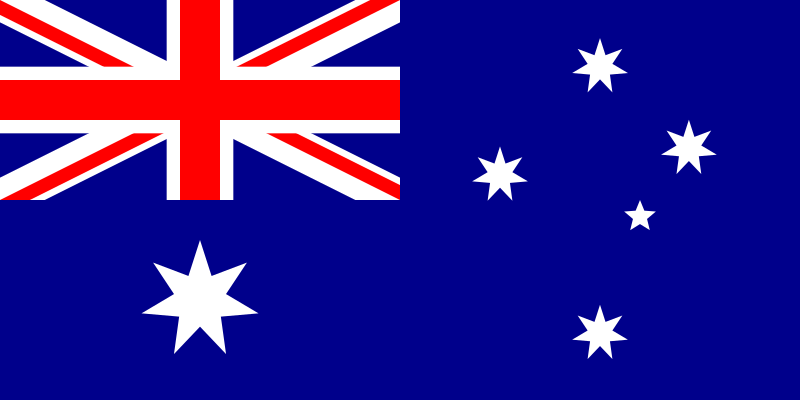
It appears I like flags with a) astronomical elements and b) blue fields.  I think I prefer the Australian over the New Zealander (Zealandish?  Kiwi?) flag.  No offense NZ; I think if the stars were just white I'd like yours more....and I think I'd like both more without the Union Jack....

South Carolina

Alaska

New Zealand

Australia

Wednesday, January 28, 2015

The Devil is in the details....

The Magic Bus
Nothing geeks out the gullible like a well-placed Pentagram (aka Pentalpha aka Pentangle).  Pop one into your letterhead and you'll have people accusing you of devil worship faster than it takes to say Beelzebub.  That's just what happened in Memphis, Tennessee earlier this month when a woman spotted a pair of pesky pentagrams integrated into the design of a school bus' brake lights.  Every time the bus brakes, which is quite often given what buses actually do, two flaming-red upside-down pentagrams are flashed to the driver behind.

I don't put any stock in Satanism being behind all this, but it does beg the question "Why’d they put it up there? Why’d they put it upside down?" as one local resident asked.

The Pentagram is an ancient symbol, appearing as a logogram in early Sumerian writing.  In the West, its earliest use is said to have been among Pythogoreans, who were in many ways the well-spring of the Western Occult tradition.  Which is fitting, for the Pentagram has long been and continues to be used by occultists of all stripes.

It was also used by ancient Christians as a symbol of the five senses and/or the five wounds of Christ.  A pentagram decorates the hero's shield in the 14th-century English poem Sir Gawain and the Green Knight.  The poet ascribes the symbol to King Solomon and
says the symbol is key to understanding the work. The poet explains that each of the five interconnected points represents a virtue tied to a group of five. Gawain is keen in his five senses, dextrous in his five fingers, faithful to the salvation provided through the Five Wounds of Christ, takes courage from the five joys that Mary had of Jesus, and exemplifies the five virtues of knighthood.
I have a picture of my mother, which must date to around 1940, standing at the doors of a small church, flowers in her hair, some sort of basket in her hand.  Pentangles form the windows of the church doors.  It's a very Pagan scene; indeed the Pentangle is pretty much the symbol of Wicca.

But why then, is it associated with evil?  Well, the Christian use is pretty much forgotten, but its use by Wiccans, Thelemites and yes, Satanists, is still pretty much current.

As a symbol of evil, it has to be "reversed"; that is to say, the two points have to be facing upward.  This belief is certainly due to the writing of influential occultist Eliphas Levi, who wrote: 
  • "A reversed pentagram, with two points projecting upwards, is a symbol of evil and attracts sinister forces because it overturns the proper order of things and demonstrates the triumph of matter over spirit. It is the goat of lust attacking the heavens with its horns, a sign execrated by initiates."
  • "The flaming star, which, when turned upside down, is the hieroglyphic sign of the goat of Black Magic, whose head may be drawn in the star, the two horns at the top, the ears to the right and left, the beard at the bottom. It is the sign of antagonism and fatality...."
An engraving of a goat inscribed in the pentagram appears in La Clef de la Magie Noire by Stanislas de Guaita (1897) and in our times this iteration is most widely known as Anton LaVey's Sigil of Baphomet.  LaVey copied the image in La Clef, I mean literally, it's the exact same image.  LaVey merely removed the words "Samel" and "Lilith", reversed the colors, then trademarked it.  But that's pretty much par for the course with LaVey.  The Satanic Bible is basically recycled (if not outright plagiarized) material from Ayn Rand, Ragnar Redbeard and John Dee.

Well, if 2 inverted pentagrams are evil, what are we to make of three?  Exhibit 23:  The GOP logo, a stylized red, white and blue elephant.
GOP logo
Discordian founder Greg Hill asked the GOP National Committee the same thing in an open letter dated 1969, found in the recently-published Historia Discordia:
And now I really hate to tell you this, but those three inverted pentagrams on your elephant's riot helmet are specifically used to conjure evil spirits -- when conjuring good spirit one needs must have one point ascending, not one part descending.
Greg's not the only one to have posed that question. To whit:  Mother Claims Stars On School Bus Are Satan’s Symbol, So What’s That Make The GOP?

Good question, chums.  Fnord.

Funny thing is I'd linked to this article on the LoS Facebook page on January 16, just after linking to an article about the conspiracy theories popping up in the wake of the Charlie Hebdo murders.  That article featured a photo with a logo I somehow missed at first.  Here's a better shot of that logo:


BRI Paris logo
This is the logo of the Brigade de recherche et d'intervention, Paris.  The BRI are elite special police used in robbery or kidnapping situations, usually when hostages are involved, and for capturing gangsters.  They're basically police commandos, à la SWAT, created for pretty much the same purpose. 

Here's a link to brief history of the Brigade, in French.  The logo is basically a target overlooked by a horned and bearded, red-eyed figure, a demon at least, if not Satan himself.  It's an especially evil-looking creature which I figured for a gargoyle.  For some reason it seemed familiar and I guessed it came from Notre-Dame and in fact, I'm right.  This photo describes it as the "famous chimera [or gargoyle] on top of Notre-Dame de Paris".

In the original, the demon overlooks Paris, on the watch, one would suppose, for sinners, taking notes, taking names.  The BRI has turned him into a black figure, like themselves, in black fatigues, body armor and ski masks, ever-watchful, but unseen.  Like at the business end of a scope on a sniper rifle.  A visual ode to the surveillance state.

This logo might indicate something sinister after all....

Wednesday, September 11, 2013

Lone Star: Back to Africa

Preface

I originally intended this post to be a quick blurb about Liberia, but I kept running across information which seemed relevant to my initial subject; before I knew it I was heading off into numerous fascinating directions, and, as is so often the case, what I found could easily be transformed into a book if only the situation were a bit different:  firstly that I were a smarter fellow and secondly if I had access to a world-class library.

Fortunately the Internet is getting better and better and there is no lack of original documents available online.  My work here wouldn't hold much water in a peer-reviewed journal, but I do think it's a credible survey of some valuable secondary sources.  I've also got some academic background in the subject.  In 1991-1992 I wrote my senior thesis for my B.A. in history on black nationalism and the Back to Africa movement.  My emphasis was on the spiritual dimensions of these movements and traced their evolution from advocating a literal, physical repatriation to Africa into a spiritual re-orientation and cultural return, a voluntary separation of the races within the United States and the re-definition of what it meant to be Black, Negro, Asiatic, Muslim, what have you.  What surprises me in retrospect is that in my original paper, 60+ pages long, I never once touched upon the topic of Freemasonry, whereas now I believe it was an important, if not the principal catalyst to the development of some of the more radical spiritual/political movements in 19th-century African-American life.

The Gid, my LoS partner, actually accompanied me on a trip in late 1991 to South Carolina to visit a separatist group there living according to the customs and religious practices of the Nigerian Yoruba, something I only recalled towards the end of writing this.  (See Oyotunji, they didn't have a website back then!)

This is a limited and often surface treatment of several related topics and I ask you to recall that this post is not the fruit of years of research and reflection, but a public expression of my learning process; it is thus prone to errors of interpretation. It is also, in a sense, a prose poem in disguise.

The Lone Star in Africa

In Lone Star Republics (July, 2013) I used the title to identify several mostly short-lived republics created by different revolutionaries, impresarios, adventurers and filibusterers intent on setting up new republics around the Gulf of Mexico and Caribbean, largely corresponding to the area (the Golden Circle) envisioned by the Knights of the Golden Circle as the natural location for their slave-holding commercial empire, an extension of the South.  These various filibuster schemes may or may not have been directly linked to the larger schemes of the Knights and/or the Confederate States of America.  What the Lone Star Republics did have in common were two things:  Masonic leadership and the unabashed reference to Freemasonry on flags which prominently featured a solitary star, either on a solid field of blue or red or in a canton of that color against a field of horizontal bars.  Various configurations of this heraldry exist and in some cases, such as in Chile and Texas, the flag is referred to as a "Lone Star Flag".

The Golden Circle from http://knights-of-the-golden-circle.blogspot.fr/
Musing on this, my mind wandered to the flag of Liberia.  I didn't expect to find a relevant connection, to be honest, mainly because in the Golden Circle, the Lone Star Republics were established in part to extend or preserve the institution of slavery.  Liberia, on the other hand, was created in order to repatriate freed slaves in Africa.  So slavery was certainly part of the equation, but was Freemasonry?  The answer is yes.

In my initial musings, Morocco and Liberia were the only African flags that came to mind featuring solitary stars, but I soon stumbled across the flag of Ghana.  Looking first at Morocco, I soon rejected any notion of Masonic influence, but I was surprised to see that the flag, which features a green five-pointed star on a red field, once featured a six-pointed star, or "Star of David."  While it may be surprising to see a symbol so closely associated with Judaism on a Muslim country's flag, it's actually used quite a bit in Muslim heraldry and is known by Muslims as the "Seal of Solomon" in addition to the "Star of David."  Its widespread use in hermetic and alchemical texts may well explain how the star came to be used in Freemasonry, but in this it is only tangentially related to the topic at hand.

If we exclude the flags which feature a Muslim crescent and star or a Communist star and sickle, we also have to extend the list of star-bearing flags to include:  Burkina Faso, Cameroon, the Central African Republic, the Democratic Republic of Congo, Djibouti, Ethiopia, Guinea-Bassau, Senegal, Togo and Zimbabwe.

The stars in these flags are said to represent Islam, Marxism or the light of revolution; sometimes a star is a star is a star, it has many associations and doesn't necessarily refer to Freemasonry.  I think, however, that like the Lone Star Republics in the Americas, the star on the Liberian flag represents Freemasonry and its Five Points of Fellowship.  As for the other flags, unless you think Islam and international Communism are parts of a conspiracy which includes Freemasonry, and there are clearly people who do, I don't think there's a Masonic connection, although Togo's flag is said to be inspired by that of Liberia.

(A useful overview of Freemasonry in Africa can be found here).

Liberia

A quick look at Liberia's history is enough to demonstrate why I feel that the lone star in Liberia's flag represents Freemasonry.

Wikipedia gives a succinct summary:

In 1820, the American Colonization Society (ACS) began sending black volunteers to the Pepper Coast to establish a colony for freed American blacks. These free African Americans came to identify themselves as Americo-Liberian, developing a cultural tradition infused with American notions of racial supremacy, and political republicanism.  The ACS, a private organization supported by prominent American politicians such as Abraham Lincoln, Henry Clay, and James Monroe, believed repatriation was preferable to emancipation of slaves.  Similar organizations established colonies in Mississippi-in-Africa and the Republic of Maryland, which were later annexed by Liberia. On July 26, 1847, the settlers issued a Declaration of Independence and promulgated a constitution, which, based on the political principles denoted in the United States Constitution, created the independent Republic of Liberia.

I haven't been able to find any indication that the ACS was Masonic, per se, but many early supporters and members were Freemasons.  Attendees at its inaugural meeting in 1816 included Freemasons such as James Monroe, Andrew Jackson, Francis Scott Key; Henry Clay presided.  On the other hand, another attendee was Daniel Webster, who ran for Vice-President in 1838 as a candidate for the Anti-Masonic Party.  Of the three man considered to be the ACS' co-founders, Henry Clay, John Randolph and Richard Bland Lee, only Clay was a Freemason.  (As far as I can tell).

In addition to Freemasons, Monroe, Jackson, Key and Henry Clay were also slaveholders.  The ACS was a mix of slaveholders and abolitionists, many of them Quakers, whose motivations were to mitigate the dangers of a slave-holding society, such as slave rebellions, and to expunge freed blacks from American society.  Most of them didn't support mixing with the blacks they repatriated; repatriation was really a drastic kind of segregation.  Wikipedia states that:

Critics have said the ACS was a racist society, while others point to its benevolent origins and later takeover by men with visions of an American empire in Africa. 

This is an interesting point to consider, as it resolves the apparent conflict between the aims of the KCG and Lone Star adventurers and those of the ACS, which at first appear more benevolent.  That said, the rhetoric of the ACS was deemed racist even by standards of the time and some contemporary abolitionists expressed the belief that the "ACS' works [were] palliative propaganda to soften the continuation of slavery in the United States."  This belief characterized the historiography of the society during the 1980's and 90's, but more recently this has shifted back to the view that the group was genuinely anti-slavery.

The other colonies mentioned by Wikipedia do not appear to have had an especially strong Masonic presence.  Only one leader of the Maryland colony (the Republic of Maryland from 1854 to 1857) before it became part of Liberia appears to have been a Mason; John Brown Russwurm, a Prince Hall Mason, was the longest-serving Governor of Maryland in Africa (1836-1851), the precursor to the Republic.  Mississippi-in-Africa was a short-lived colony with only one Governor before becoming part of Liberia.

Republic of Maryland, 1854 - 1857
From what I gather (some sources differ), the first repatriated ex-slaves arrived in what was to become Liberia in 1822.  In 1827 they adopted the following flag, modeled on the US flag of 13 stripes and blue canton.

Republic of Liberia, 1827-1847
The cross was sometimes represented with a longer bottom "arm", but after Liberia issued a Declaration of Independence and a Constitution, establishing the Republic of Liberia in 1847, the cross was replaced by a star.

Flag of Liberia, 1847-Present
According to the FOTW website:

....Liberia’s national flag is  called “Lone Star”. The eleven horizontal stripes represent the eleven signers of the declaration of independence and the constitution of the Republic of Liberia; the blue field symbolizes the continent of Africa; the five pointed white star depicts Liberia as the first “independent republic” on the continent of Africa; the red color designates “valor”; the white, “purity”; and the blue, “fidelity”. Although these representations are uniquely Liberian, the flag itself is a replica of “Old Glory”, the national flag of the United States.

Other sources confirm the "Lone Star" appellation; it is also the nickname of the national football (soccer) team.

Although information on Masonry in Liberia prior to independence is scanty,  after independence was quite a different story.

Author Chris Hodapp:

From the beginning, Liberian society quickly developed into three classes: settlers with European-African lineage, who came to be known as Americo-Liberians; freed slaves from slave ships and the West Indies; and indigenous native people from the existing tribes already living in the territory. Liberia was dominated by a single political party for over 130 years, the True Whig Party, based in large part on the American Whigs, the precursor to the Republican Party in the years after the American Revolution and before the Civil War. The Liberian Whigs were almost entirely Americo-Liberians, and top government officials were uniformly Freemasons. By the 1970s, there were seventeen lodges at work in the country under the auspices of the Grand Lodge of Ancient Free & Accepted Masons of the Republic of Liberia, with approximately 1,000 members, and the longstanding sentiment of the tribal population was that decisions about the nation were all made secretly behind Masonic closed doors.

This small clique of about a dozen families dominated the country's politics and excluded indigenous Africans and descendants of slaves from points other than the US.  This hegemony and the exclusion of indigenous Africans from the Lodge meant that when a coup d'etat was staged by Samuel Doe in 1980, the Lodge was targeted alongside the existing political regime; the hand-in-glove relationship between Lodge and State is personified by William R. Tolbert, Jr. who was both President of Liberia and Grand Master of the Grand Lodge of Liberia at the time of the coup.  Naturally, the Lodge was outlawed by Doe in 1980.

During the turmoil and violence which has taken place since the coup in 1980, the Grand Lodge building was virtually destroyed and fell into ruin, eventually becoming the home of thousands of squatters.  The squatters were evicted in 2005 and the Lodge is apparently currently rebuilding their Lodge building....and their influence.

Early African-American Proponents

Liberia and other colonies like it were only the beginning of a Back to Africa movement which envisioned a literal repatriation of freed slaves.  As the only one of these colonies to survive, it would continue to play an inspiring role in the Back to Africa movement, even as the movement took on an increasingly Pan-African character.  So far we've looked at predominantly white-led groups, so let's turn to some important African-Americans.

Paul Cuffee (1759-1817) was a man of mixed-race descent.  His mother was a Native American and his father a freed slave from what is now Ghana.  An enterprising self-made man, he made himself one of the day's richest African-Americans by his early fifties, learning as much as he could about shipping and commerce.  After acquiring the necessary wealth and resources, he became interested in voyages that mixed personal enrichment with African repatriation.  In 1815, at great personal cost, he led 38 colonists to Sierra Leone, where they successfully established themselves.  Cuffee would later envision mass repatriation to Sierra Leone but eventually favored Haiti.  His involvement with the ACS was brief; he was too repulsed by their open racism, but the ACS derived great inspiration from his successes; Liberia after all is a neighbor to Sierra Leone.  Like many in the ACS, Cuffee was a Quaker.

Prince Hall (1735-1807) was an abolitionist, educator, philanthropist and what would be today called a civil rights leader.  He was also a proponent of the Back to Africa movement and founder of what is known as Prince Hall Freemasonry.  Prince Hall and 15 other black men were initiated into a Lodge attached to the Grand Lodge of Ireland.  The Irish Lodge was a military Lodge and when it left town the men were authorized to operate as a Lodge.  Here the history became a bit convoluted, but suffice it to say that due to racism within Masonry it became independent of the Grand Lodge of England in 1827 and evolved into a separate institution for black Masons.  Until recently, many "mainstream"--that is to say whites only--Grand Lodges did not recognize it as legitimate, relegating it to clandestine status, usually reverting to the often Byzantine arguments of legitimacy to mask what was essentially racism.

(For an overview of Prince Hall Masonry, see here).

When I first saw the following chart 10+ years ago, all of of the states below the Mason-Dixon line were in white; as you can see, the only states which still do not recognize Prince Hall are below the line in what was once the Confederacy.

Copyright Paull Bessel: http://bessel.org/masrec/phamap.htm
Prince Hall and those who joined him to found Boston's African Masonic Lodge built a fundamentally new "African" movement on a preexisting institutional foundation. Within that movement they asserted emotional, mythical, and genealogical links to the continent of Africa and its peoples.  --James Sidbury

According to the Grand Lodge of Liberia, when the original Americo-Liberian settlers landed in Liberia in the early 1820's, it was known that there were Prince Hall Masons among them, but it was not until 1867 that the dispensation was given so that Prince Hall Masons in Liberia could form a Grand Lodge under the aegis of Prince Hall Masonry.

The Back to Africa movement and Prince Hall Masonry have had a long association, dating back to Prince Hall himself.

Although Hall and Cuffee were rough contemporaries, and both were proponents of repatriation, I cannot find anything online to demonstrate that the men knew one another.  Surely as abolitionists, education activists and leaders in the African-American community in Massachusetts, they must have at least known of each other, but with my limited resources I'm afraid I can't say much else.

Freemasonry and other Fraternal organizations were certainly an important feature of African-American civil life.  In a kind of weird coincidence, there was even a fraternal group called the Order of the Lone Star Race Pride.  A book entitled Social and mental traits of the Negro; research into the conditions of the Negro race in southern towns, a study in race traits, tendencies and prospects (1910) discusses this Lodge in some detail beginning on page 115.  Thing is, this book lists literally dozens of fraternal groups in the South, but the name, not just the Lone Star but the reference to Race Pride is for me anyway, highly evocative.

A third Prince Hall Mason to have a profound effect on Marcus Garvey was Martin R. Delaney (1812-1885).  Some have argued he was the first black nationalist.  Abolitionist, writer, journalist, philosopher, inventor....he was also one of the first three blacks admitted to Harvard Medical School and the first black field officer in the US Army, obtaining the rank of major.  In 1853 he wrote a short book entitled The Origin And Objects Of Ancient Freemasonry: Its Introduction Into The United States, And Legitimacy Among Colored Men.  He had written his first book proposing mass emigration, perhaps to the West Indies or South America in 1852.  In 1854 he led the National Emigration Convention and read his Political Destiny of the Colored Race on the American Continent; this moment is considered to be one of the foundations of black nationalism.

That said, he travelled to Liberia in 1859 to look into to possibility of settlement; he stayed nine months and signed a treaty for settling "unused" land in exchange for bringing skill to the region, but white missionaries undermined his plans and the outbreak of the Civil War put an end to them.  He later sought an appointment as Consul General to Liberia.  As Reconstruction began to be curbed and whites successfully began limiting the voting rights of blacks, a group of African-Americans in Charleston again took up plans for emigration; in 1877, they formed the Liberia Exodus Joint Stock Steamship Company.  Delaney chaired he finance committee with Delany as chairman of the finance committee and a year later, the company purchased a ship called the Azor for the voyage.  Delany was president of the board that organized the voyage but he withdrew in 1880 to concentrate on supporting his family.   This was his last involvement in an emigration scheme before his death.

The UNIA

Marcus Garvey (1877-1940), was a proponent of Pan-Africanism, Black Nationalism and going Back to Africa.  Like Paul Cuffee (1759-1817) before him, who helped to create ACS, he sought to mix business interests with African repatriation in founding the Black Star Line, taking its name from the White Star Line of Titanic fame.  Internally plagued with corruption and infiltrated by government agents who did their best to destroy it through sabotage, the Black Star Line lasted three years (1919-1922), but it's impact on African-Americans (in the larger sense of the Americas) and Africans was enormous.  Not wanting to overstate the issue, it is of interest in this post because Garvey chose the star for his symbol.  Could it also have been a Masonic reference?  Was he inspired by Liberia's flag?  Like Governor Russwurm, Garvey was a Prince Hall Freemason.

Another of Garvey's creations was the Universal Negro Improvement Association and African Communities League, founded in 1917.

Interestingly the UNIA itself had many Masonic characteristics:


In 1922, in his perceptive analysis of Garvey and the UNIA, Hodge Kirnon stated that "there is no indication that Garvey meant it [the UNIA] to be anything more than a fraternal order." .... Amy Jacques Garvey later recalled that Garvey became a Mason "through the influence of John E. Bruce and Dr. [F. W.] Ellegor [but] he did not attend Masonic meetings, he was always too busy, so the connection dropped." Moreover, she disclosed that UNIA chapters operated quite freely within the ranks of black fraternities.

During the final four years of his life, Garvey turned even more emphatically toward the Masonic ideal based on secret knowledge. With the defeat of Ethiopia in the Italo-Ethiopian War of 1935--1936 and the rapid escalation of militarism throughout Europe and Asia, Garvey revised dramatically his previous estimates of what political movements alone could be expected to accomplish. Thus, he viewed as problematic the absence of "masonry in his [the Negro's] political ideals," noting that "there is nothing secret in what he is aiming at for his own hope of preservation." Garvey was alluding to the evolution of the fraternal idea from its earlier craft stage into a potent political vehicle, one based on the organization of secret revolutionary brotherhoods.

From the start, the UNIA shared numerous features with fraternal benevolent orders. The UNIA's governing Constitution and Book of Laws held the same status and function as Freemasonry's Book of Constitutions and Book of the Law. The UNIA's titular "potentate" was clearly analogous to the "imperial potentate" of the Ancient Egyptian Arabic Order of the Nobles of the Mystic Shrine, or black Shriners. The High Executive Council of the UNIA and ACL reflected the Imperial Council of the black Shriners and the Supreme Council of Freemasonry in general. The elaborate and resplendent public displays by the UNIA, particularly during its annual conventions, drew upon the example of the black Shriners and other fraternal groups. .... Other features shared with fraternal orders included solemn oaths and binding pledges, special degrees of chivalry (such as the Cross of African Redemption, Knight of the Sublime Order of the Nile, and Knight of the Order of Ethiopia), and an auxiliary Ladies' Division with its own "lady president" (article 5, sec. 5). An editorial in the Negro World (30 April 1921) entitled "A Word Regarding Titles," pointed out that "the Order of Free and Accepted Masons, the Grand United Order of Odd Fellows and other religious and fraternal bodies have a hierarchy of titles. And we do not see wherein the U.N.I.A. is introducing an innovation."

The Lone Star meets the Black Star

The UNIA also did work to help African-Americans migrate to Liberia, sending a delegation there in 1923 to scope out the situation and make a survey of potential migration sites, a project supported by the Liberian government.  Apparently Liberia was going to lease land to the UNIA for one dollar per acre.  The plan fell through, however, and the Liberian government cut a better deal with the Firestone Rubber Company.

When Garvey died in 1940, James R. Stewart was elected to head the UNIA.  In 1949 he moved to Liberia, where he became a citizen.  The Parent Body of the UNIA was located there until Stewart's Death in 1964.  Liberian President William Tubman became Potentate and Supreme Commissioner of the UNIA in 1954 and was a close friend of Stewart.  Tubman was President of  Liberia from 1944 to 1971 and became known as the "Father of Modern Liberia".  He was also a Prince Hall Mason.  He was succeeded by his VP since 1952, William Tolbert, who was, we have seen, also Grand Master of the Grand Lodge of Liberia.

Ethiopianist and Arabist Offshoots

I came across an interesting paragraph in a book entitled Black Pilgrimage to Islam by Robert Dannin:

Evidence of the struggle between churched and unchurched ideologies is also reflected in the history of the Prince Hall Masonic lodges where Ethiopianist and Arabist proponents clashed repeatedly. Ethiopianism had roots in the missionary experience as a quasi-biblical justification for emigration. It originated in the work of Martin Delany and came to rest in Marcus Garvey's familiar scenario of a pure African nation. Though radical in style. it belonged to and constituted a theology of redemption. Arabism, on the other hand, was a representation or Islam constructed out of fragmentary knowledge. Like other folk traditions and vestigial religious beliefs it was discordant to the ears of churchmen.

Having once studied this subject at some great length, I saw in this "Ethiopianist and Arabist" conflict a reference to developments in African-American spirituality.  Again, "America" here meaning the entirety of the New World.  The Ethiopianist tendency is most visible in Rastafarianism.  The Arabist tendency was expressed in Noble Drew Ali's Moorish Science Temple and later in the Nation of Islam.  In other words, Prince Hall Freemasonry is an important source of both Rastafarianism and the Nation of Islam.  A lot of people will find that proposition outrageous, as Freemasonry is often vilified by the Nation of Islam, but I think there's some merit in the argument.

I have long been aware of a book entitled Dread Jesus by William David Spencer.  Spencer traces Rastafarianism back to Garvey's UNIA.  Furthermore, he

....insists on the role played on the foundation of Rastafari religion by three preachers: Leonard Howell, H. Archibald Dunkley, and Joseph Nathaniel Hibbert. As far as Dunkley and Hibbert are concerned, he insists on their membership in the Great Ancient Brotherhood of Silence, or Ancient Mystic Order of Ethiopia, one of the "black" (or "Prince Hall") Masonic organizations. Spencer claims that a number of features of Rastafari religion derive from this branch of Freemasonry (including the name "Jah" for "God", coming from the Masonic form "Jah-Bul-On"). Later Rastafari leaders and authors, such as Dennis Forsythe, were in turn influenced, according to Spencer, by the Rosicrucian order AMORC. Rastafari is, thus, a syncretistic faith including elements from the Western esoteric and occult tradition, Christianity, and Jamaican and Caribbean lore (including the trademark Rastafari dreadlocks, and the use of ganja.

This will undoubtedly be hard to swallow, but as Dannin says "Freemasonry was....integral to the construction of black civil society in Colonial North America."  Indeed he links the growth in Prince Hall with the "considerable immigration of West Indian colored people".  This is a little more credible when we consider that Hall may have been born in Barbados or elsewhere in the Caribbean, although Sidbury believes he was a native New Englander.  What is certain is that Garvey was born in Jamaica, and lived there after being deported from the US.  He died in London but his body was re-interred in Jamaica twenty years later.  Furthermore, Rastafarians consider him a religious prophet, as does the pre-Rasta Holy Piby;  Marcus Garvey is to John the Baptist as Haile Selassi is to Jesus.  Some even consider him a reincarnation of St. John.  A patron saint of Freemasons, incidentally.

The flag of Ghana features the African tricolor associated with Ethiopia and Rasta, with a black star in the center--inspired by Marcus Garvey!   The tricolor refers to the flag

Kwame Nkrumah, first President of Ghana after independence and pan-Africanist, also named the national football team the Black Stars and the national shipping line the Black Star Line in honor of Garvey.


As for Arabism, Freemasonry is one of the many sources of belief for the Moorish Science Temple of America, which also drew upon just about every other mystical current from several world religions: Gnosticism, Taoism, Buddhism, Christianity, etc. although a quick look around the net indicates the "Moors" claim to be the inventors of Freemasonry. 

(The Mormon Endowment Ceremony is also drawn from Masonic ritual, yet many Mormons claim the reverse to be true, that somehow Freemasons are practicing a "corrupted" version of much more ancient LDS rituals).

The Arabist element is the Moorish Science is that it is presented as a sect of Islam, despite its decidedly "New Age" potpourri of syncretism and the belief that African-American are descended from, as the name suggests, the Moors, or Medieval Muslims of North Africa.

After Temple founder Noble Drew Ali's death, Wallace Dodd Ford, aka Wallace Fard Muhammad, founded the group that became the Nation of Islam.  He was succeeded by Elijah Muhammad who in turn was succeeded by current leader Louis Farrakhan.

Something I learned just now and brings us full-circle is the flag used by the Moorish Science Temple of America:


It's the Moroccan Flag, which if you'll recall was the other flag I considered before thinking of the Liberian Lone Star.  Full Circle!

Conclusion
 
I should pause to say that Rastafarianism or the Moorish Science Temple are not Masonic creations or "fronts".  I do think however, that Freemasonic elements have made their way into them.  It seems natural that any young man of a mystical bent who later goes on to found a spiritual or secret society, or even a religion, would at some point be attracted to Freemasonry.  It was not unusual for young men of the period to have multiple fraternal memberships and seekers, well, seek.  Joining the Masons and perhaps finding them insufficient, they move on to other things.  It would seem that for a spiritual visionary, Freemasonry might become stifling and limited, hence their need to create a system of their own, borrowing freely from elements of the past.  Theosophy, New Thought, New Age, what have you, all incorporate elements from the Western mystical tradition, including Masonry, as well as from various Eastern traditions as well.

Unlike the Lone Star Republics, which in my opinion were definitely Masonic vehicles whose five-pointed stars refer to the Masonic Five Points of Fellowship, the star used by Garvey is more uncertain.  I do think it's possible, given the UNIA's link to Liberia.  Given that after Liberia declared independence, its civil leaders were virtually indistinguishable from the leadership of its Grand Lodge, it's hard not to conclude that the adoption of what in Liberia is called a "Lone Star" is not a nod to Masonry, especially considering that Masons in the Americas from whence they came were using the same symbolism for their Republican activities at roughly the same time. Maybe it isn't so cut and dry, but the symbols are there, as is a strong Masonic connection.  It seems clear that Prince Hall Masonry was an influence on the Back to Africa movement, but even more so on black nationalism; it provided an example of black men doing things for themselves, separately.  It's no secret that Garvey worked together with white separatists and nationalists, for they were essentially working towards the same goal.  Garvey passed through Prince Hall and Liberia was practically an extension of a Prince Hall Grand Lodge for over a century.  Other more radical spiritual movements seem to have felt its influence as well.  In the Golden Age of Fraternalism, Freemasonry was king, for both black and white.

I'm sure I've left a lot out and have certainly oversimplified a lot of complex history, stressing as I am points in common as opposed to points of difference, but this doesn't invalidate what is in fact the common ground.  I'd welcome any thoughts on the subject, especially as it is one in which I feel especially hampered by relying on the Internet alone to find information.  Please, feel free to write and set me straight if I'm wrong and hook us up with any important and relevant information.

Tuesday, March 1, 2011

¡Viva la Revolución!

In my last post I promised to link the sun and triangle in the sculpture above the door of the National Black Theater to other triangles...and the eye.  I've wandered a bit in this task and not made any startling discoveries; I thus present this less as something insightful than as a sort of record of my wanderings.  Quite a few things have already been written on the topic.  I could have developed this post a lot more extensively but don't really see the point, so my cut-off point is therefore rather arbitrary.

Flag of Argentina featuring the Sol de Mayo
Having an Argentine wife and a large number of both Argentinian and Uruguayan friends, it's only natural that when thinking of the sun as a symbol of regeneration, I thought of the Argentine and Uruguayan flags, both of which feature a jolly sun referred to as the Sol de Mayo, or Sun of May.

The Sun of May is named for the May Revolution of 1810, the first salvo in the Argentine War for Independence.  Some point to it as a representation of the Incan sun god Inti, but I think it's more likely based on European precedents.  The "sun in splendour" is a long-standing European heraldic device, but I propose that its use here was inspired by its use during the French Revolution.  Dig this quote from Wikipedia:

Eye of Providence
The sun, like the phrygian cap on Argentina's coat of arms and the triband flag, was already used as an emblem of the French Revolution. It has been speculated that groups of deputies in the French revolution used a seal very similar to the current Argentine coat of arms, including a sun symbol. In France, the sun was used especially in relation to the Cult of the Supreme Being. The sun in the French Revolution was adopted as a symbol from Freemasonic representations of the all-seeing eye, in a triangle in a burst of sunrays.

Declaration of the Rights of Man featuring fasces, Phrygian Cap and the Eye of Providence in a Triangle

Coat of Arms of Argentina featuring the Sol de Mayo 

It was a particularity of the 17th century to depict the eye in clouds or in glory, but it was used throughout the Middle Ages and the Renaissance, often enclosed by a triangle representing the Trinity--it began as a Christian motif.  This found its way into Freemasonry and from this use was transformed into a sun.  I would also argue that, as we can see in the examples that follow, it was also transformed into a star in glory or was reduced to the triangle alone.

In the early part of the 19th century, Latin America was in a revolutionary tumult against colonial Spain.  A variety of short-lived republics popped up and fell apart, eventually settling into the more or less stable national configuration we see today.  These revolutionaries were inspired by the successful revolutions of France and the United States, so it is unsurprising their symbols popped up in the new flags and coats of arms. The Phrygian cap, for example, used extensively in US and French revolutionary propaganda, can be seen on the flags or coats of arms of Nicaragua, El Salvador, Argentina, Colombia, Haiti, Cuba, Bolivia and Paraguay.

Flag of Chile
Several flags reflect the US design (1777) of red and white bars, a blue canton in the upper left featuring white star or stars:  Chile (1817), the flag of the Liberating Expedition of Peru (1820), Texas (1839), the Confederate States "Stars and Bars", (1861) the first flag of Cuba had blue and white bars and a red canton (1868), the Brazilian state of Amazonas (1982).  At least five other Brazilian state flags have bars and upper left cantons with stars, but these are not necessarily red white and blue.  Other Brazilian flags feature the Phrygian cap.  The Bahia state flag is a variant upon the flag of Chile et. al., but instead of a single star, the blue canton features a triangle.

Flag of the State of Bahia
Interesting that the Sun of May (springtime) in the Argentine flag features 32 rays, perhaps symbolic of the points of the compass or the degrees of Scottish Rite Freemasonry.  Also interesting that the Argentine flag inspired that of Federal Republic of Central America (1823-1838), which has the same triband colors, but replaces the sun tin the middle with a triangle within a circle.  Within this triangle is the Phrygian cap in glory, coming out from under the mountains and under a rainbow, yet another symbol of regeneration.  This symbolism still appears in the coat of arms of El Salvador.

I have already mentioned  the Cuban flag with the star and bars, but recently came across an article about the flag of Puerto Rico.  It is essentially the same flag but the red, white and blue is in a different configuration.  The article has this interesting tidbit:  "The Cuban flag was designed by Narciso López, and the concept behind the design of the flag is based on that of a Masonic apron. López was a well-known Freemason (Solomon's Lodge No. 1, F. & A. M. -- Savannah, Georgia), adventurer and soldier, famous for his attempts to liberate Cuba from Spain in the 1850s."  The author then goes on to make many of the same conclusions and links between the triangle, the sun, the star and the Eye of Providence.

The Cuban government explains the flag thusly:

The equilateral triangle which outstands is the perfect geometrical shape, because of its equal three sides and three angles, which means equality among men.

The three colours (white blue and red) are related to French revolutionary triptych of Liberty, Equality and Fraternity, and besides they the ideals of justice expressed in white pureness, and altuism and highness of those ideals in blue, with the red, reflection of the blood shed in search of freedom. They also incarnate the new republican and democratic ideals that are synthetized in the citizen of the republic, free and equal, with full rights and duties, opposedly to king´s vassals, according to absolute monarchies´ conception.

Finally, the five-pointed star, with one pointing North to indicate steadiness, expresses the balance between moral and social qualities which must tipify the state, and shines by its own light, it is to say, the independent state.

So, the star symbolizes liberty, the triangle equality and the strips union, perfection and fraternity.

I'm not sure where to fit this in so I've plunked this fact down here.  I find it somehow fitting that one nickname for the U.S. flag is Old Glory.  I always thought that this referred to renown or great praise, perhaps beauty, but I can't help now but think it also refers to the glory we have been discussing, that is the representation of rays of light as from the eye, triangle, sun, etc.

If I can make another comments about another flag: that of the Philippines, another country to have thrown of the colonial yoke of the Spanish. The Katipunan (1892) was discovered in 1896, an event which sparked the Philippine Revolution. The Katipunan was an essentially Masonic revolutionary brotherhood; most of the founders were Masons and its initiation rites and hierarchy were based on Masonic models. The first system of initiation was a triangle system, whereby a member initiated two new members unknown to one another. After this proved too unwieldy, the Masonic system was established and the organization was divided into three degrees.

Flag of Puerto Rico; the Flag of Cuba has a red canton with blue and white stripes

Flag of The Philippines
The Philippines' flag is a variation upon the Cuban/Puerto Rican flag: red, white and blue, triangular canton....but instead of a single star there are three stars at each point of the triangle. A yellow sun adorns the middle. This sun is not at all out of line with our other revolutionary flags; the sun is also thought to be a reference to the flag of the Katipunan, the Masonic brotherhood that kicked off the Philippine Revolution.

The Lautaro Lodges were secret, quasi-masonic Lodges and included such revolutionary leaders as: Bernardo O'Higgins (1778-1842) in Chile; José de San Martin in Argentina (1778-1850); Simon Bolivar (1783-1830) just about everywhere a revolution was to be found; Francisco de Miranda (1750-1816) in Venezuela.... It is difficult to escape the fact that Freemasonry inspired these men. It would not be surprising then that as in France, where the Eye of Providence was transformed by revolutionaries into a sun symbolising regeneration and illumination, it would appear in the New World as well. Note also how the sun finds itself replaced by a triangle, recalling its origin, and that in the Federal Republic of Central America, as in the Argentine coat of arms, the sun becomes a Phrygian cap in glory. Triangle, Sun, Eye, Phrygian cap....each one replaces the other.


Lodge Founder Miranda was said to have been made a Mason in 1783, in Philadelphia, at a Lodge frequented by Lafayette:

There is no irrefutable data concerning the exact day and month of his initiation. It appears that, due to contingencies derived from the war, the archives of the Lodge where Miranda received the Masonic Light, were lost. What is amply known, however, is that Lafayette was his Principal Recommender or "Godfather of Initiation". There are also numerous references citing his constant visits to Lodges in New York, and his fraternal meetings with George Washington at a number of Masonic gatherings.

Actually, a lot of doubt has been shed on this. Miranda's diaries only reveal two visits to Lodges, not as a Freemason but as a curious outsider. But this was only part of his wide-ranging interests. Such visits to a variety of incongruous places are multiple. It would appear that the repetition of this story has made it appear to be an ironclad truth when in fact, it is not.

It seems obvious that Freemasons played critical roles in the 19th century revolutions of Latin America, inspired by two 18th century revolutions where Freemasons played equally important roles.  Yet this is a far cry from saying Freemasonry orchestrated them.  The sun, although used as a symbol in Freemasonry--and one should ask here what symbol isn't?--is hardly its most important.  The Phrygian cap and Liberty Pole aren't Masonic at all.  (It occurs to me that the Liberty Pole is a version of the Maypole, a rather phallic component of springtime festivities naturally celebrating regeneration).  The recurrence of triangles and suns, evoking the eye of providence, certainly make it appear as though revolutionary Freemasons had some say in leaving their mark.  None of this is "hidden".  These symbols would have been easily recognizable in their day.  Today, Freemasons make no bones about advertising the Freemasonic affiliation of revolutionaries, even when this affiliation is unconfirmed.  Indeed, one can say the both Freemasons and their critics overstate the role Freemasonry played in these revolutions.  Which is not to say that individual Freemason and Lodges didn't play important roles.  But even here we must be careful to sort the accumulation of received ideas from historical reality.  And besides, the triangle and the sun have long non-Masonic traditions.

We have already discussed how the New World had been regarded as the regeneration of the Old as far back as Francis Bacon.  In the latter-half of the 18th century and beginning of the 19th, several historical transformations came to a head.  I have identified three important historical threads.....the rise of capitalism, the beginning of the modern nation state and the development of the scientific method.  It seems clear that in business and modern diplomacy, as well as in scientific endeavour, competence needed to take precedence over privilege, and that competence needed to be cultivated.  In promoting reason over blind faith, the forward-thinking leaders of the day were in natural conflict with the Church.  In promoting capability over entitlement, they ran into conflict with the aristocracy and the nobility.  As young men, eager to make their way in society, found themselves blocked, their anger naturally grew.  As the desire to progress met resistance, something had to give. 

Naturally, some men grouped together to give history a push in the right direction.  One must also consider that the leader of the Revolutions were mostly men of means; I am always surprised to see how many Generals in the French Revolutionary Army were minor nobles.  Certainly a lot of the rhetoric was self-serving, applying equally to dispossessed masses as well as the minor nobles and bourgeoisie who, without the right name or connections, found their aspirations hampered.

Freemasonry became a tool in this struggle.  I think the doctrine of human improvement, if not perfectibility, runs counter to the idea of natural aristocracy:  the nobility saw themselves as naturally better than others, chosen by God.  The Catholic Church saw all men as born corrupt.  Various Protestant sects saw a man's fate as pre-destined.  But Masons saw things differently:  all men were created equal and can improve.  This would later be worded in the American Declaration of Independence

We hold these truths to be self-evident, that all men are created equal, that they are endowed by their Creator with certain unalienable Rights, that among these are Life, Liberty and the pursuit of Happiness.

I see the "pursuit of happiness" to be of special importance here.  Happiness isn't guaranteed, only the opportunity to achieve it.  I interpret this not in happiness as a mood, but as a state of fully-realized self, whether professionally, spiritually or mentally.  It is the guarantee that no social order will inhibit the industrious individual's right to realize their hopes and aspirations.  At least in theory.  Modern American Freemasons use the motto:  "Making Good Men Better."


Properly understood, therefore, when John Locke, Samuel Johnson, and Thomas Jefferson wrote of “the pursuit of happiness,” they were invoking the Greek and Roman philosophical tradition in which happiness is bound up with the civic virtues of courage, moderation, and justice. Because they are civic virtues, not just personal attributes, they implicate the social aspect of eudaimonia. The pursuit of happiness, therefore, is not merely a matter of achieving individual pleasure. That is why Alexander Hamilton and other founders referred to "social happiness".

"Life, Liberty and the Pursuit of Happiness" also form a neat trinity, bringing us back to the triangle.  This trinity of inalienable rights can also be seen in the French Revolutionary motto:  "Liberté, Fraternité, Egalité".

Still, as I said earlier, one must be careful not to overstate the role that Freemasonry played in Revolutionary movements; we should instead speak of individual Freemasons.


Paradoxically then, the interests of masonic and non-masonic authors have coincided in trying to exaggerate and enlarge the role played by Freemasonry in the independence of Chile and other South-American countries. Wishful thinking replaced the critical apparatus of the historian, and the indiscriminate use of the word ‘Lodge’, without distinguishing between masonic and non-masonic organizations, has compounded the confusion.

The documentary evidence as well, has often been of a sort that raises serious doubts about its validity.  Spanish historians, some of whom are inclined to discover the hidden hand of Freemasonry in any place where Spanish interests have been affected....enthusiastically embraced the theory that the Lautaro lodges (which, for them, were regular masonic Lodges in all respects) were the root and soul of the Latin-American independence movements.

This simplistic view ignores, of course, the other factors operating at the time, such as the growing antagonism between ‘criollos’ and ‘peninsulares’, the weakness of the Spanish crown at the time, the profound influence of the ideas of philosophers such as Rousseau, Saint-Simon, Locke and Hume and the example of the North-American colonies who gained their independence from England.

Did Freemasonry then play no role in the independence of Latin-America? The answer depends, to a large extent, on what we mean by independence. If we refer only to the military actions that led to the final defeat of royalist Spanish armies and their expulsion from the continent, we must admit that the direct influence of Freemasonry was minimal. This does not mean, of course, that we should adopt a radical scepticism on this subject. There is a well-documented participation of individual freemasons in the independence struggles of all American regions, north, centre and south. For some of them, their masonic background and experience was a determining factor in their libertarian efforts. For others, masonic membership was only a minor component of their personal history and view of the world. Since we cannot enter into the hearts of men, we have no way of evaluating the true importance that ‘being a mason’ held for men such as Bolívar.

Complete independence is a long and complicated process, involving many aspects, that may take many decades to come to fruition. In this sense, the contribution of freemasons towards expanding and completing the independence process of which political independence is but the first stage cannot be overstated.

Which seems to be the most sensible view of things; after all, it supports the conclusion I had come to previously!  I was also pleased to find this article by (Freemason) Alex Davidson entitle The Masonic Concept of Liberty:

In summary, we can say that Freemasonry was one of the channels, perhaps the main channel, by which the values of the Enlightenment were transmitted from Britain to America, France, the Netherlands....The essentials of the message were liberty, tolerance and sociability, and.....the idea that through reason, all men could find a way of life that is satisfying and fulfilling.

Secondly, we can show from history that Freemasonry was inevitably the bearer of revolutionary Enlightenment ideas where liberty did not exist. We know with reasonable certainty that the French lodges did not practice politics, yet their philosophy could not but cause many of their members to be active participants in the politics of revolutionary liberation movements. Freemasonry may have been officially neutral, but its members were not. And finally, we can remark that we are all, indirectly, the beneficiaries of Freemasonry and the Enlightenment: we now regard their general political values as so normal that we tend to take them for granted. Secularism, constitutionalism and parliamentarism are their heritage, obviating the need for revolutionary action to achieve liberty.

So.  I think this concludes what I wanted to get at in this article.  A kind of meandering and at times contradictory train wreck of a post that's gone a long way from suns and triangles.  I consulted The Gid on where to go with this, and he had some good ideas, but even his sage advice wasn't enough to save us here.  Like the battery bunny, I just keep going and going and going.  And just because I'm tired of this beast, I'll plant my flag here and cry "¡Ya basta!"

See Also:  Masonic Republics